What Is Bankruptcy and How Does It Affect Your Credit?
Bankruptcy is a legal process designed to help individuals or businesses eliminate or repay their debts under the protection of the bankruptcy court. While it can provide relief from overwhelming financial burdens, bankruptcy has severe and long-lasting consequences for your credit profile.
Impacts of Bankruptcy:
• It can lower your credit score by 150-200 points or more.
• It stays on your credit report for up to 7-10 years, depending on the type.
• It signals to lenders that you are a high-risk borrower, making it challenging to secure credit, loans, or housing.
Don’t let bad credit hold you back!
The Different Types of Bankruptcy: Chapter 7 vs. Chapter 13
1. Chapter 7 Bankruptcy (Liquidation):
• Most of your assets are sold to repay creditors.
• Stays on your credit report for 10 years.
• Ideal for individuals with low income and limited assets.
2. Chapter 13 Bankruptcy(Reorganization):
Allows you to keep assets while repaying debts through a court-approved plan over 3-5 years.
Stays on your credit report for 7 years.
Suitable for those with a steady income.
3. Chapter 11 Bankruptcy:
Chapter 11 (business reorganization) and Chapter 12 (farmers and fishermen) are less common for individuals.
The Long-Term Impact of Bankruptcy on Your Credit Score
Bankruptcy’s impact on your credit score depends on your starting score. The higher your score, the greater the drop. This drop makes it difficult to:
1. Obtain loans or credit cards.
2. Rent housing, as landlords often perform credit checks.
3. Secure employment in certain industries where credit checks are required.
4. Over time, rebuilding your credit becomes possible with disciplined financial behavior.
Consequences of Bankruptcy
1. Credit Score Damage: Bankruptcy significantly lowers your credit score.
2. Difficulty Securing Credit: Many lenders are hesitant to work with individuals who have filed for bankruptcy.
3. Public Record: Bankruptcy filings are public and can be accessed by anyone.
4. Loss of Assets: In Chapter 7, non-exempt assets may be sold to pay creditors.
Bankruptcy doesn’t have to define your financial future. Let DB Credit Repair help you rebuild your credit and regain control. Click to get started now.
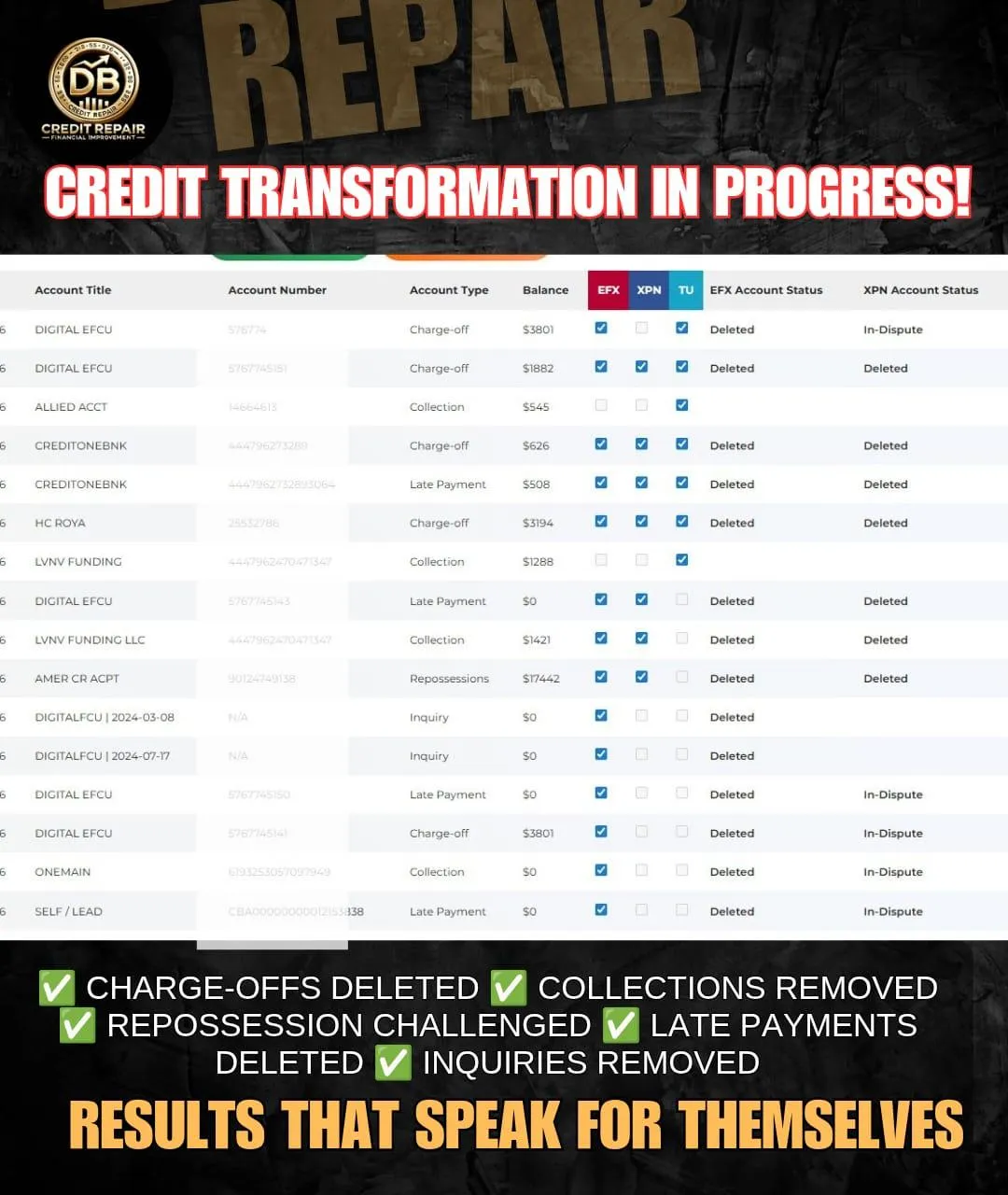
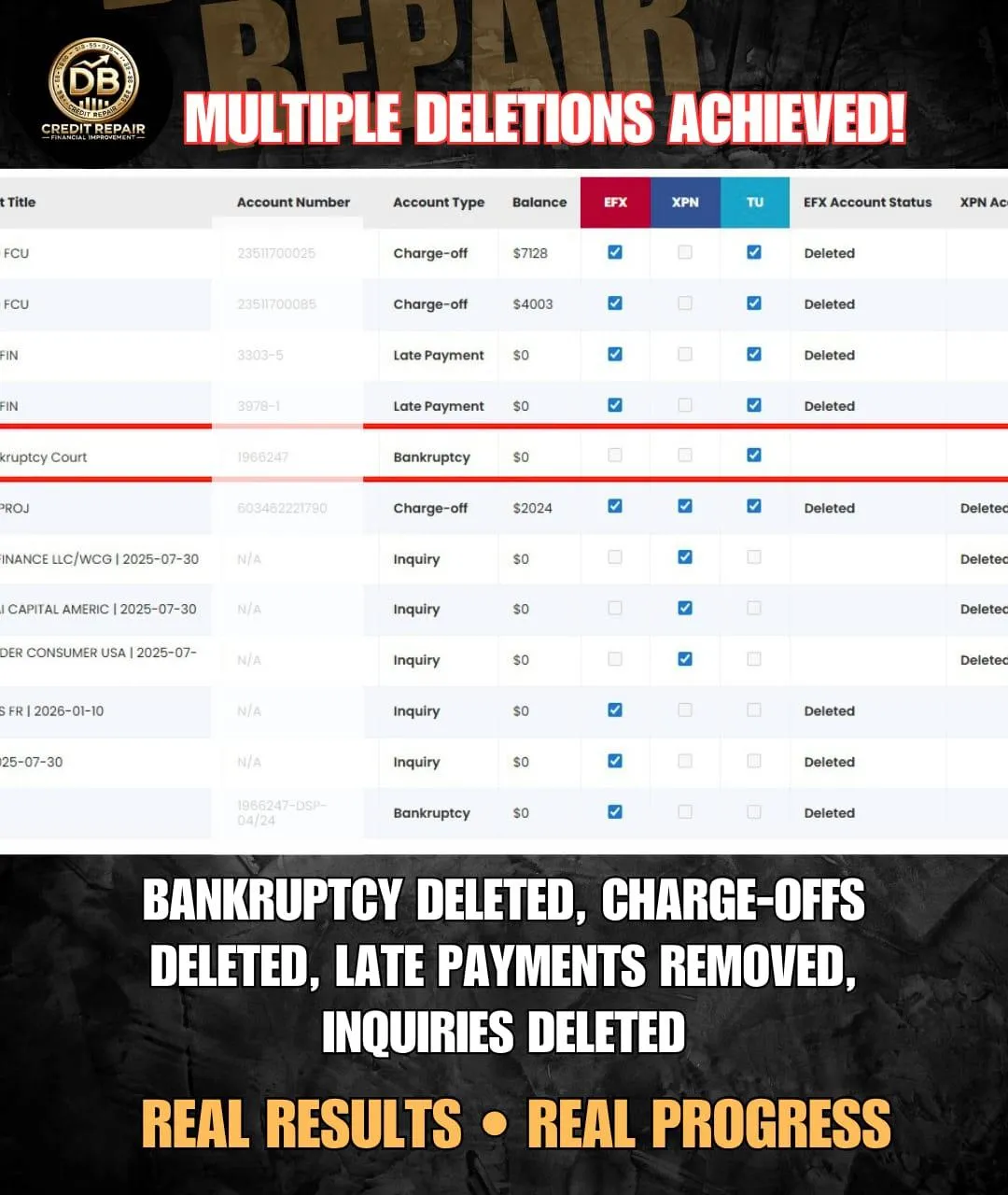
Real People. Real Success Stories.
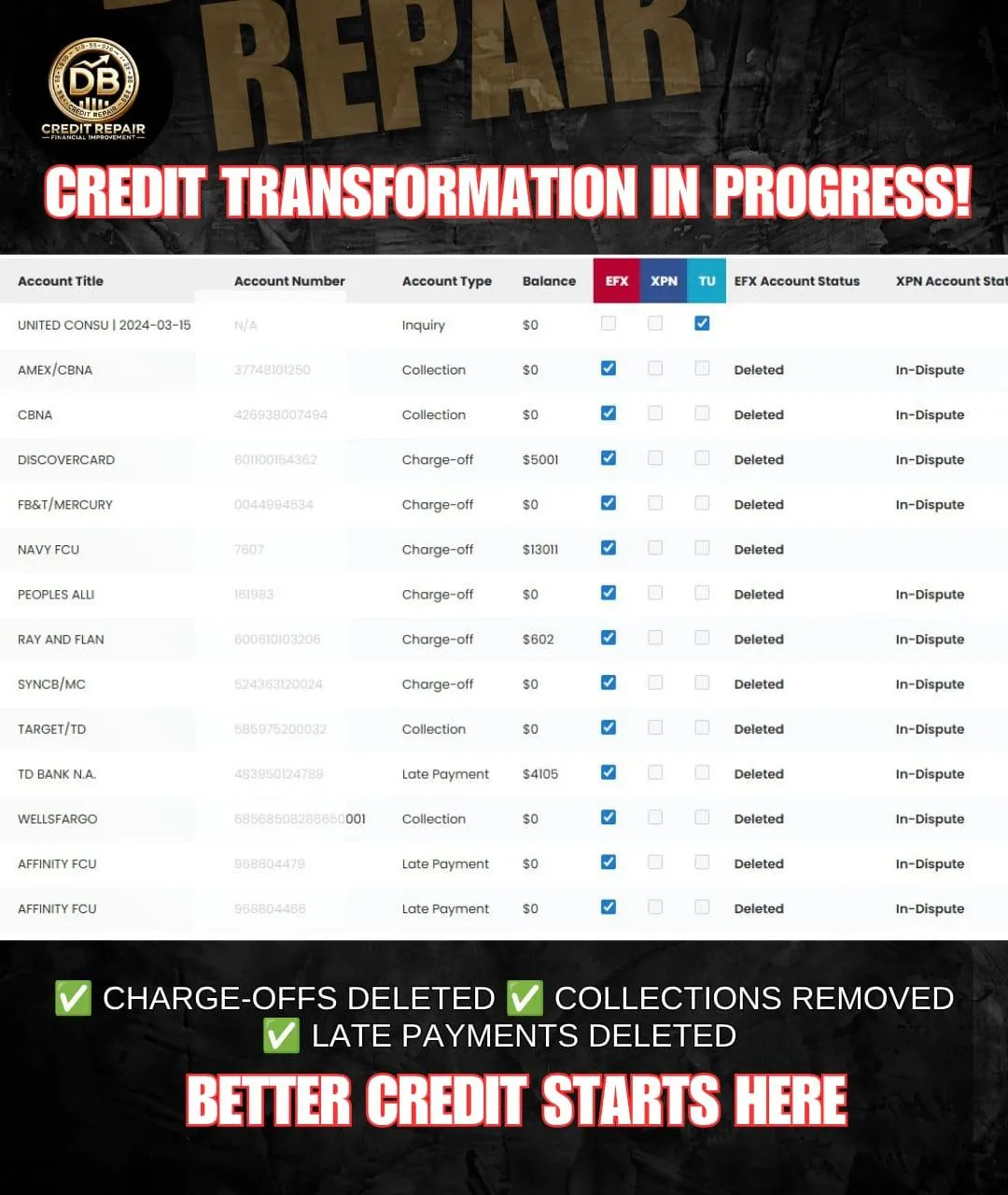
Take Control of Your Credit & Financial Health with DB Credit Repair
Your credit score plays a crucial role in your financial future. At DB Credit Repair, we provide expert solutions to help you recover from financial setbacks, improve your credit score, and achieve long-term financial stability.
How DB Credit Repair Can Help You Rebuild Your Credit After Bankruptcy
1. Credit Review
We begin with a detailed review of your credit reports to identify information that may be inaccurate or unverifiable.
We assess your credit issues and provide a personalized quote best for your credit issues, and complete payment.
2. Dispute Inaccuracies
Bankruptcy entries often contain errors. We’ll dispute incorrect or unverifiable information with the credit bureaus to ensure your report is accurate.
3. Post-Bankruptcy Credit Repair
Rebuild Credit:
We’ll guide you in establishing new lines of credit to rebuild your score responsibly.
4.Credit Education:
Our experts will teach you how to maintain a healthy credit profile and avoid future financial pitfalls.
5. Bankruptcy Alternatives
If you’re considering bankruptcy, we’ll explore other options like debt negotiation or settlement to help you avoid it altogether.
6. Credit Monitoring Services
We provide ongoing monitoring to track your progress and alert you to potential issues before they escalate.
Bankruptcy doesn’t have to define your financial future. Let DB Credit Repair help you rebuild your credit and regain control. Click to get started now.
What Are Judgments and How Do They Affect Your Credit?
Judgments are legal decisions made by a court when you fail to repay a debt or fulfill a financial obligation. They often result from lawsuits filed by creditors, landlords, or other entities seeking repayment. Once a judgment is issued, it becomes a matter of public record and can significantly impact your credit profile. Although judgments no longer appear on credit reports, they can still be found in public records and negatively influence your ability to secure loans, credit, or even rental housing.
Key Impacts of Judgments:
• Potential wage garnishment or bank account levies.
• Difficulty securing new credit or loans.
• Increased interest rates due to perceived risk by lenders.
The Impact of Judgments on Your Credit Score and Financial Stability
While judgments are no longer listed on your credit report, their presence in public records can still harm your financial credibility. Lenders and other entities may conduct background checks that reveal these judgments, leading to:
1. Reduced Creditworthiness: Creditors may view you as a high-risk borrower.
2. Financial Constraints: You may face garnishments, liens, or other enforcement actions.
3. Housing, employment, and financing options may be restricted.
By resolving judgments, you can regain control of your financial stability and reduce the obstacles they create.
Can Judgments Be Removed from Your Credit Report?
Here's How
Although judgments are no longer directly reported by credit bureaus, they remain accessible through public records. Here's how to address them:
Pay or Settle the Judgment: Fulfill the judgment amount or negotiate a settlement with the creditor.
File a Motion to Vacate: If the judgment was issued in error or without your knowledge, consult an attorney to have it vacated.
Request Satisfaction of Judgment: Once paid, request a satisfaction of judgment from the court to prove resolution.
Dispute Inaccuracies: If you notice errors in public records, file disputes with the reporting agencies or court.

How DB Credit Repair Can Help You with Collections
We guide you through every step of the process, ensuring you achieve the best possible outcome.
1. Credit Review
We begin with a detailed review of your credit reports to identify information that may be inaccurate or unverifiable.
We assess your credit issues and provide a personalized quote best for your credit issues, and complete payment.
2. Dispute Resolution
If inaccuracies exist, we work to have them corrected or removed.
3. Negotiation Assistanc
Our experts can help negotiate settlements or payment plans with creditors.
4.Ongoing Support
We guide you through every step of the process, ensuring you achieve the best possible outcome.
Take Action Today
Judgments can feel overwhelming, but you don’t have to face them alone. At DB Credit Repair, we’re committed to helping you resolve judgments and improve your financial future.
Take the first step today To rebuild your credit.
Tax Liens and How Do They Impact Your Credit?
A tax lien is a legal claim the government places on your property when you fail to pay your taxes. It serves as a warning that the government can seize your assets if the debt remains unpaid. While tax liens are no longer included in consumer credit reports, they can still affect your financial opportunities by appearing in public records.
mpacts of Tax Liens:
Difficulty securing loans, credit, or mortgages.
Potential asset seizure or wage garnishment.
Damage to your financial credibility.
The Long-Term Financial Consequences of Tax Liens
Even though tax liens no longer directly affect your credit score, they can:
1. Prevent you from selling or refinancing your property until the lien is resolved.
2. Show up in background checks conducted by lenders, landlords, or employers.
3. Accumulate interest and penalties over time, increasing the total amount owed.
How Tax Liens Affect Your Credit Report and Score
Tax liens were removed from credit reports by the major credit bureaus. However, they are still visible in public records, which lenders and creditors may access during the approval process. This means tax liens can indirectly impact your financial credibility, limiting your options for credit and other financial opportunities.
Can Tax Liens Be Removed from Your Public Record?
Although tax liens are not on credit reports, they remain in public records until resolved. Here’s how to address them:
1. Pay the Lien in Full: Once paid, request a Certificate of Release of Federal Tax Lien from the IRS.
2. Apply for Withdrawal: If the lien is paid or meets certain conditions, you may qualify for a withdrawal to remove it from public records.
3. Dispute Inaccuracies: If the lien was filed in error, you can dispute it with the IRS or your state tax authority.
4. Negotiate with the IRS: In some cases, you may qualify for an Offer in Compromise to settle your tax debt for less than the full amount owed.
Take Charge of Your Credit And Let Us Help You Address Tax Liens Today
Tax liens can feel overwhelming, but you don’t have to face them alone.
At DB Credit Repair, we’re here to guide you every step of the way, ensuring your financial stability and creditworthiness are restored.
Let us help you resolve your tax liens and take control of your financial future.
Ready to Rebuild Your Credit Today?
Legal Disclaimer
We provide credit review and dispute assistance services in accordance with applicable federal and consumer protection laws. Our role is limited to disputing information that may be inaccurate, incomplete, outdated, or unverifiable based on the information provided by the client.
We do not guarantee the removal of any specific item, credit score increase, or particular outcome. Items that are verified as accurate by credit bureaus or data furnishers may remain on the credit report.
Services include up to six (6) months of dispute support. Results vary based on individual credit profiles and third-party response timelines.
Options:
Get in Touch
Email: [email protected]
Customer Support: +1 888-297-5003
Whatsapp Us: https://wa.me
Address: 100 S Bedford Rd Suite 340, Mt Kisco, NY 10549, United States
Assistance Hours : Mon – Sat 9:00am - 7:00pm
Sunday – CLOSED


More Links